Transformative Education

In line with Jarvis (2015) in her video introducing transformative learning theory, I picture transformation (especially this time of year) as a monarch caterpillar eating up as much milkweed as they possibly can to then attach itself to any surface that is within their place of being to contort themselves into a cocoon. From this web of magic, it can look like a place of dormancy to the outer world, yet it is a safe and nourishing space where transformation takes place and a beautiful, strong butterfly capable of soaring to heights that one could not previously imagine emerges. Isn’t this like the spaces and places that Professional Learning Communities and Personal Learning Networks bring us? We build our communities and networks often times for the work, or the project or for the learner, and know not the outcomes that we ourselves will have been graced with. We may hunker down in the comfort of the community or grow, stretch and challenge self in the discomfort too.

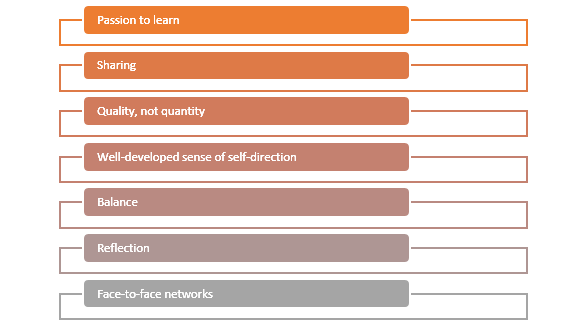
PLNs – a.k.a, the places and spaces that allow us to grow professionally and personally, to be connected to people, community and content. To feed our development in a way that stretches what we know and how we learn and to share our learning and growth with others in person and virtually (across the meeting table or the world). Richardson & Mancabelli (2011, p.35) provide us Guideposts for Learning in Networks that feel essential to what helps us to transform our leadership knowledge, skills and abilities beyond the status quo:
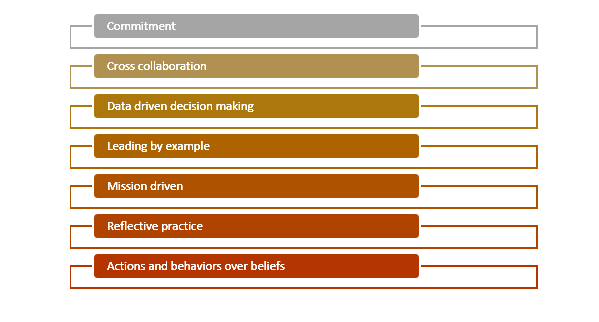
PLCs – a.k.a., the place of commitment, to colleagues, to learners and to self. The spaces where collaboration if forefront, where the focus is on the learning, and outcomes and results are an essential part of the community. The PLC feels to me as a more formal experience than diving full-on into a PLN; however DuFour et al (2016) reminds us that the PLC is meant to “empower educators to make important decisions and encourages their creativity and innovation in the pursuit of improving student and adult learning” (p. 13).  Based on the work of DuFour et al (2016), I have parsed out a few of the components of a PLC that can cross function as building blocks of a transformational leader:
Ultimately, an essential common thread that I see between the PLC and the PLN is educators learning from, with, and about each other – the true sense of interprofessional education. These networks/communities allow us opportunity to expand and share our knowledge and in the spirit of Jarvis (2015) to radically change the way that people think and feel…to see profound changes in learners and to become transformational leaders. Through my eyes, healthcare education has been in significant transformation in the past 2.5 years. Covid-19 forced us to move at the speed of light and to figure out new ways to education our residents and fellows through the use of technology, ultimately as I have previously written creating accidental learning communities. Wellness and well-being of healthcare professional has been in the spotlight long before C-19 hit our world and there is important research over the past 10 years that gives voice to the reality of burn-out and challenges in medical education. The following article summaries (one from the Covid-19 era, and one from a previous decade) discuss transformational leadership (and its importance to learning and employee engagement) and tap into components of both a PLC and PLN.

van Diggele et al (2020) and Nielsen & Munir (2009) contributions suggest that transformational leaders positively impact their learners/team members/followers. Although medical education does not utilize the formal language of a PLC or a PLN, there are learning opportunities that are consistent with these formal practices. Grand Rounds, be it nursing, medicine or quality are integral to the learning of healthcare professionals on topics such as leadership, diversity, equity, inclusion and belonging and specialty related practice. Morbidity and Mortality Rounds are deep dives into clinical practice and a means to improve quality and patient safety. Within these learning experiences, residents/fellows and faculty rely on each other for the direction that the learning. To achieve better patient outcomes, van Diggele et al (2020) summarize leadership strategies:

  • Healthcare educators need leadership and management skills
  • Leadership through influence  without authority is necessary no matter the level of one’s role
  • Emergent leaders role model autonomy and accountability, teamwork
  • Education is inclusive of a focus on patient outcomes

They point out that transformational leaders transform individuals and use teaming to achieve organizational goals. I appreciate their focus on of Bass & Aviolo’s four “I’” of transformational leadership, Idealized Influence, Inspirational Motivation, Individualised Consideration, Intellectual Stimulation as a means for leaders to lead with clarity through values and vision.

Healthcare educators are most often practicing providers with clinical responsibilities (surgery, patient rounds, and outpatient clinics) as well as other administrative functions. It can be a challenge to shift on any given day between their competing priorities and there doesn’t ever seem to be enough time for either the patient or the learner. “At some point, most leaders in healthcare education need to make a decision about their leadership direction, and whether it lies predominantly in higher education…” (p. 3) van Diggele et al (2020). This is a struggle – how do we provide for processes that are consistent in nature of a PLC when we know that our clinical educators are already stretched thin? Interprofessional education and teams are the wave of the future and investments in social capital, van Diggele et al (2020), can support leadership development in organizations. This continues to be a hot topic in healthcare professions education and likely not one to be solved for in the immediate future. Nielsen & Munir (2009), an older article, yet important for the context of today’s world of medicine and the prevalence of burn-out and the challenge this imparts on developing transformational leaders. Building leadership competency takes time, yet is essential for self-efficacy and wellbeing of followers in their own development of transformation leadership behaviors (p.323).

There is much more for healthcare to learn about the use of PLCs and PLNs within the healthcare educational setting, or at the least in the formal sense. Transformational leadership is ripe for the picking in healthcare education and we are making movements every day.

References

‌Dufour, R., Rebecca Burnette Dufour, Eaker, R. E., Many, T. W., & Mattos, M. (2016). Learning by doing : a handbook for professional learning communities at work. Solution Tree Press.‌

Jarvis. (2015, August 15). introducing transformative learning theory [Video]. YouTube. http://www.youtube.com/watch?v=liU1zsi3X8w

Nielsen, K., & Munir, F. (2009). How do transformational leaders influence followers’ affective well-being? Exploring the mediating role of self-efficacy. Work & Stress23(4), 313–329. https://doi.org/10.1080/02678370903385106

Richardson, W., & Mancabelli, R. (2011). Personal learning networks: using the power of connections to transform education. Solution Tree Press.‌

van Diggele, C., Burgess, A., Roberts, C., & Mellis, C. (2020). Leadership in healthcare education. BMC Medical Education20(S2). https://doi.org/10.1186/s12909-020-02288-x

Creation vs Curation

https://sniply.io/blog/perfect-balance-content-curation-vs-creation/

Habits – I have heard over time that it takes anywhere from 21 – 90 days to create a habit. I consider myself a creature of habit and also someone who may fly by the seat of my pants; a dichotomy that is always at odds. Once upon a time I created a Hootsuite account as a means to keep me on schedule with posting content, because I knew that followers only came with regular and fresh posts. I utilized a cross-platform approach, and set up my posts blast out to Facebook, Twitter and LinkedIn; publishing to my coaching business pages. Curation (even though I didn’t really know what that meant a decade ago) felt like cheating to me. I never felt comfortable reposting or pulling from another’s work in a way that didn’t give full-on credit. And, even a little squeamish with combining content, because it felt too easy and not a part of the creative process. It felt like letting an expert in the field do the work and for another person to run on their shirt tails and hard work!

Now…as I have seen social media take off, and recognize that people are finding their way in the world of curation, and becoming a subject matter expertise on less than original content, I wonder if there is more wiggle room for my opposite ways of being to work in this social media space. Can curation shift my being and lead me to success? Is there a place where pushing others’ content in an ethical way is appropriate? I was sure I would be creating all types of content in 2013! I had hung my coaching and consulting shingle and the projects and work were coming in. I was headed out the door of working for “the man” and headed into the world of self-employment and entrepreneurialship. I has set the stage to use my network (no clue at the time what a PLN was either, even though I had one) and the pieces and parts were in place. I was full on ready to go! Then an internal role came up in the organization where I worked – one that I had kept my eye on over the years. I pivoted, stepped back from the idea of creation and content development and let go of all the business development opportunities that I had put in motion. I an now relearning and see that curation is a practice, perhaps even and art. Original creation, in the true sense is still there my heart is.

During previous career roles such as that of human services teacher, adjunct faculty, and later a performance consultant in the organizational development realm, it was a given that content found online or through a conference was usable and reproducible it if was to be used for teaching and learning. Content could be morphed into a new worksheet or other materials and we shared openly. This was part of the content creation process. We shared and learned from each other. Credit was given where credit was due! For individuals who were out to sell their product and were running a consulting business, their content was typically licensed and required payment to utilized it, even in the classroom. There was plenty of content to draw from that was free and an abundant of opportunity to connect with colleagues at conferences to share and build upon ideas and even get personal permission to use their work (my favorite part of content development at the time).

In this world of having your cake and eating it too, and “here’s a side of ice cream” as Leqi (2021) and colleagues put it, the big dog social media platforms like Facebook, Twitter, and YouTube benefit from the overall debate of whose job is it anyway for accountability in the content posted on their sites. While the argument rages on about creation vs curation – Leqi et al (2021) point out, the social medial biggies benefit by:

Broad discretion to organize (and censor) content however they choose

Powerful algorithms for curating a practically limitless supply of user-posted microcontent according to whatever ends they wish

Absolution from almost any liability associated with that content

Is this bad business? It surely doesn’t seem so because humans are still flocking to social media sites. Is this bad ethics? It does seem so! The rumblings of the curation vs creation debate are front in center at Old GigiOm’s Blog (https://old.gigaom.com/2012/03/13/its-not-curation-or-aggregation-its-just-how-the-internet-works/) where they delve into the idea of using symbols and a code of conduct to keep the honest people honest. People who are truly “stealing” content are not goin to follow the rules anyway. And, what a nightmare to manage – a big wide world of content without a means to hold people accountable to begin with. I wonder though, did social medial platforms have to become difficult to manage in content and in scope? What if appropriate side rails were set up early in Web 1.0? Hard to know now! If MSM – Main Stream Media can’t even do it right, such as giving credit to original posters where credit is due; how do we expect the general population to do so. Trust, ethics and doing the right thing runs deep on social media. As I move toward using social media in new ways, in curation and creation, and building out my new PLN, I know that I have the security of my internal ethics and doin the right and best thing for myself and for those who came before me in the content development space. I love the opportunity to share the work of others and in today’s world a hyperlink makes that so easy! This is a habit I can commit to and I don’t think that it will day 90 days!

Covid-19 and the Accidental Professional Learning Network

At the very onset of the first known case of Covid-19 in NH (our organization) social media was boosted as a means to communicate to the masses; employees, patients and community members. Keeping in mind that in our region these three cohorts often cross-over with one person being a member of each of the three groups. Imagine being a front line care provider or an ancillary service team member and watching the unknown unfold before your eyes into major change on a daily basis and sometimes as information became available even quicker. Within 14 days of the first known case, administrative employees were moved to remote work (thousands of employees across the system), clinical teams were broken into cohorts in order to provide remote and onsite working conditions that limited the amount potential exposure between care teams, and what was a bustling main campus of our system – was now a ghost town. Visitors were denied access to their family member for their protection, the protection of the patients and employees. We were living in a world of confusion and fear and one of the big questions was how do we get the word out? How do we educate, how do we provide a sense of safety and a sense of caring?

We all stepped into building PLNs without uttering those words, or really (for me anyway) having any idea what a PLN is all about. I watched out Communications and Marketing team implement a series of Facebook live events and community updates by our chief officer team. It wasn’t long before our organization was tied closely to the State of NH as the experts untangled the challenges of Covid-19 and its treatment. Videos were produced to send messages, to create a sense of caring and collaboration and intranet sites were built by our Human Resources functions (benefits, learning and organizational development) to share learning resources and wellness/well-being resources for employees. Barriers were broken down in our speed of agility- a pace we had never seen before. Teams were stood up and used technology to learn and connect (WebEx and Zoom) and mind you there were major growing pains!

PLNs were sprouting up through tele-medicine (a system we had in place, yet not in a broad scope). Soon our patients were connecting at a regular basis with their care providers through a screen. So Jetson’ like. We moved at the speed of light, we smoothed the sadness and despair as we were able; sometimes, we simply were not able. Online exercise and medication opportunities became more widely used and our leaders transformed themselves and their teams. We fully transitioned to virtual interviewing for all residency and fellowship programs. This is now a national movement that has continued into year three and what started as a means for safety has morphed into a system of equity in the entire GME Match system. 

The formal sense of PLNs and schools that have executed on global learning networks are known to share 7 common traits (Richardson & Mancabelli, 2011). I am going out on limb with language freedom to align them with medical education and what Covid-19 has brought us – a new way of being, opportunity through the darkness and the challenge of how to keep the energy of agility in front of us and never to settle back in to the slow politics in health care to move ahead with innovation.

  • Residents are better prepared for the practice of medicine in the 21st Century: critical thinking/problem solving, data driven decision making, collaboration and leading without authority, agility in giving and receiving feedback, entrepreneurial spirit and truth speaking, and curiosity and imagination, Wagner (2010) as cited in Richardson & Mancabelli (2011).
  • Clinical learning environments are more engaging.
  • Residents are responsible and take ownership of their own learning.
  • Clinical education is more individualized.
  • Faculty become better at their jobs and build problem-solving capacity.
  • Residents are safer, practice self-care and are supported in their well-being.
  • Academic Medical Centers save time and money

Medical Education in general has become more agile since our first day of Covid-19 and I have faith that we will continue to grow in the concepts of PLNs and I look forward to being along for the ride!

Richardson, W., & Mancabelli, R. (2011). Personal learning networks: Using the power of      connections to transform education. Solution Tree Press.

Team Norms – A Creative Palette to Draw From

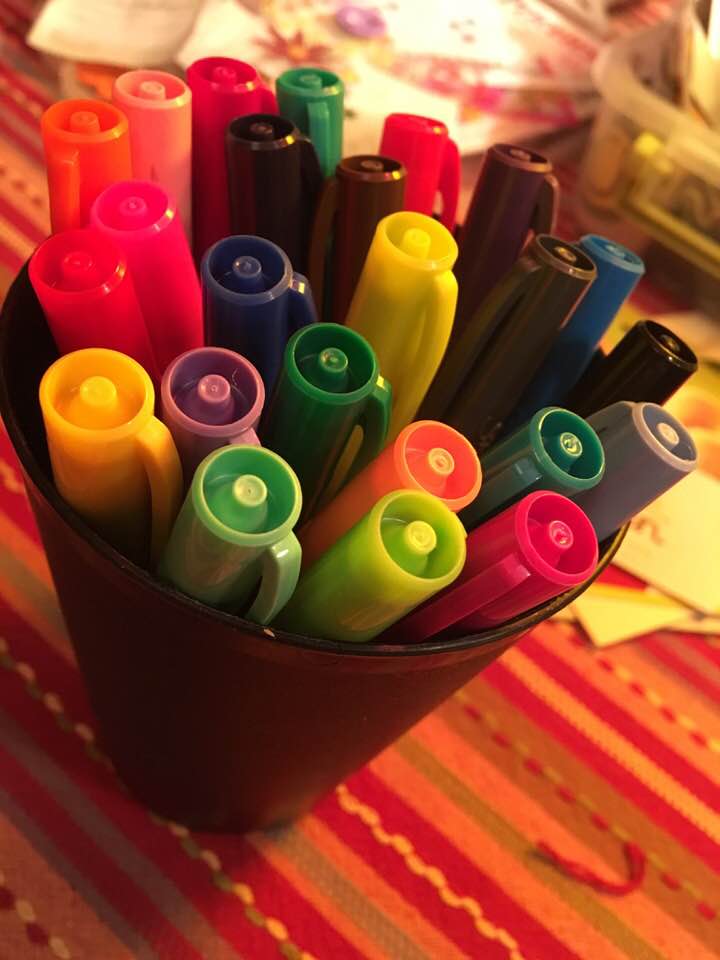
Bruce Tuckman (Psychologist) is well known for his team development phrase and concepts of, “Forming, norming, storming, and performing.” I have uttered these words many times over my organizational development and leadership work in workshops, team meetings and retreats. My desire of being the forever cheerleader of bringing people together in the spirit of creating a colorful pallette of wisdom to have our work together be as meaningful and purposeful as possible. The creation of building a high performing team is rooted in high emotional intelligence and clarity of expectations of individual team members, their contribution, responsibilities, and relationships.

What are Team Norms?

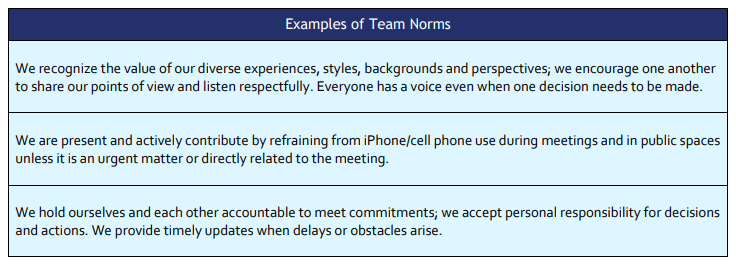
Penn Medicine Academy share in their Guide to Developing Team Norms (nd, p.1) that “Norms are guidelines for how the team members will interact and communicate. Norms help to clarify the expected behavior of individuals on the team and prevent unnecessary conflict” (p.1) leading to:

  • Effective decision making.
  • Clear expectations for how the team interacts and performs.
  • Effective assimilation of new team members.
Establishing team norms helps create a clear set of expectations for how team members
participate, contribute and interact with one another to achieve team goals and results

Creating Team Norms

Dufour et al (2016) give us 6 tips to creating team norms:

  • Teams create their own norms
  • State norms as commitments of actions or behaviors
  • Review norms at the beginning and end of meetings for the first six months
  • Formally evaluate norm effectiveness 2 times a year (minimum)
  • Keep the color pallet basic with an essential list of essential norms
  • Have one overarching clarifying norm to deal with non-observance of team norms

I love words of wisdom from leadership, coaching and social/emotional intelligence experts who have been at the forefront on leading high performing teams through creative opportunities for decades. They lay the pallet of discovery for us, and allow us as leaders the space to create our own ways of being for our specific teams based on their learning. Dufour et al (2016, p.78) summarize leadership thoughts from these experts with:

Why Should We Create Norms?

Teams improve their ability to grapple with the critical questions when they clarify the norms that will guide their work. These collective commitments represent the “promises we make to ourselves and others, promises that underpin two critical aspects of teams – commitment and trust” (Katzenbach & Smith, 1993, p. 60).

Explicit team norms help to increase the emotional intelligence of the group by cultivating trust, a sense of group identity, and belief in group efficacy (Druskat & Wolff, 2001).

When self-management norms are explicit and practiced over time, team effectiveness improves dramatically, as does the experience of team members themselves. Being on the team becomes rewarding in itself — and those positive emotions provide energy and motivation for accomplishing the team’s goals” (Goleman, Boyatzis, & McKee, 2004, p. 182).

Norms can help clarify expectations, promote open dialogue, and serve as a powerful tool for holding members accountable (Lencioni, 2005).

Referring bac to the norms can help “the members of a group to re-member,” to once again take out membership in what the group values and stands for; to “remember,” to bring the group back into one cooperating whole” (Kegan & Lahey, 2001, p. 194).

Inattention to establishing specific team norms is one of the major reasons teams fail (Blanchard, 2007).

After looking at over a hundred teams for more than a year, researchers concluded that understanding and influencing group norms were the keys to improving teams. Researchers noted two norms that all good teams generally shared. First, members spoke in roughly the same proportion. Second, the good teams were skilled at intuiting how others felt based on their tone of voice, expressions, and other nonverbal cues (Duhigg, 2016).

High Performing Teams and Why Norms Matter:

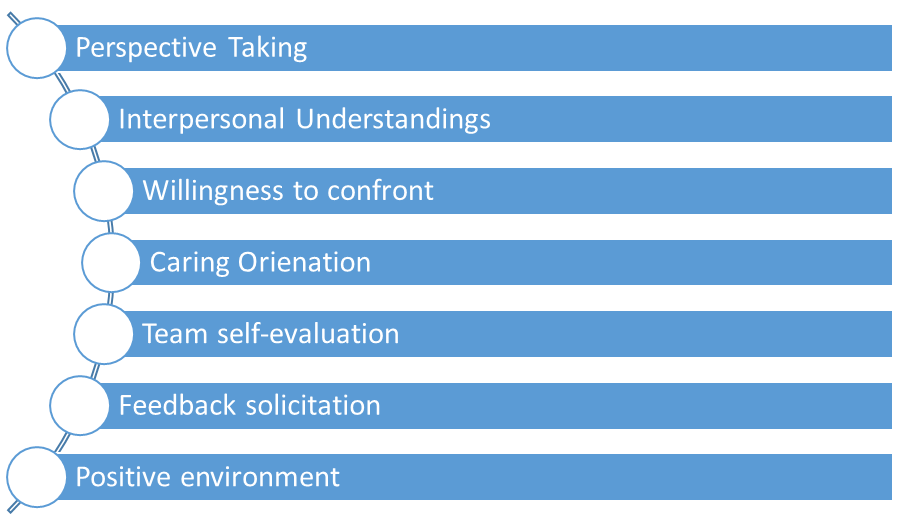
Lencioni (2003) as cited in Dufour et al (2016) shines light on the building block of vulnerability-based trust (p. 71) and with that team members will utilize their knowledge of strengths and weaknesses in self and others to learn through mistakes and failures. A study by Druskat & Wolff (2001), cited by Dufour et al (2016, p. 72), suggest that members of high performing teams consistency display several characteristics of emotional intelligence.

Setting team norms through reflection, honest open dialogue and clear expectations will provide time and space for teams to design, learn and grow together as team that is moving forward together with trust and knowing that the commitments they make together are a guide to positive communication and high team performance.


References

DuFour, Richard, D., Rebecca, Eaker, Robert, Many, Thomas W., & Mattos, Mike. (2016). Learning By Doing: A Handbook for Professional Learning Communities at Work (Third). Solution Tree.

Penn Medicine Academy. (n.d.).  Tools for Developing Effective Teams. Med Upenn. https://www.med.upenn.edu/uphscovid19education/assets/user-content/documents/leading/guide-to-establishing-team-norms-final.pdf

Mind Tools. (2022). Forming, Storming, Norming, and Performing. Mind Tools. https://www.mindtools.com/pages/article/newLDR_86.htm#:~:text=Psychologist%20Bruce%20Tuckman%20came%20up,their%20way%20to%20high%20performance.